My new book, The Bargain, the prequel to The Carving Place, is in the proofreading stage. When I did the math to figure out how old Characters Asa Sinclair and Paulette would have been when this story began, I landed on the 1967-69 time frame.
Wow. I started to include some of the cultural, political, musical situations that marked that landscape of time. There were too many. True rock and roll was new, culture was marked by experimental drugs, and free love.
Where were you in 1968? I was only 13, but was already feeling the influence of the music.
Instead of focusing on a cultural history lesson, I chose to weave just a little of it into the story so you knew where you were in time. I let Paulette Toliver, Asa Sinclair, and a host of new characters tell their own stories.
If you read The Carving Place, the new book is a prequel, telling you the story of Buck's mother Paulette and how he came to live with the Sinclairs.
I'm dedicating this book to the friendships of women, especially the relationship between and older woman and a young girl. I can't say more or I will spill the beans. Read The Carving Place before you read The Bargain. The story will be more meaningful.
I hope to have the new book out around the first of April. So, get ready. Turn on the lamp on your bedside table and get ready for a night of reading. That's about how long it will take you to finish it. But I hope the characters of Paulette, Asa, Merry Bell, and Winston stay with you a long time.
Saturday, February 23, 2019
Monday, September 24, 2018
I never tire of a good journalism flick, especially this one
I'm watching the 1976 movie All the President's Men for the umpteenth time. It helps if I let a few years lapse between viewings so that I can be blown away by the beautiful, raw, journalism that is demonstrated by Washington Post reporters Bob Woodward (Robert Redford) and Carl Bernstein (Dustin Hoffman) as they blow the Watergate scandal wide open.
In case you don't remember or were born before or near 1973, The Watergate scandal was a major political scandal that occurred in the United States during the early 1970s, following a break-in by five men at the Democratic National Committee (DNC) headquarters at the Watergate office complex in Washington, D.C. on June 17, 1972, and PresidentRichard Nixon's administration's subsequent attempt to cover up its involvement. After the five burglars were caught and the conspiracy was discovered—chiefly through the work of a few journalists, Congressional staffers and an election-finance watchdog official [1]—Watergate was investigated by the United States Congress. Meanwhile, Nixon's administration resisted its probes, which led to a constitutional crisis and the ultimate resignation of the President.
Watch trailer below
https://www.youtube.com/watch?v=vLt6djxhNe8
This movie takes me back to the summer of 1973 when I was asked to be a news intern at WNJC, the NPR-affiliated station of then Northwest Mississippi Junior College. I had no longer finished exams than I started working with News Director Ann Muchmore,who taught me how to rip and read Associated Press copy, how to search for local, small-town news, get sound bites and much more. We didn't have long because May 17, 1973 the station began carrying gavel to gavel coverage of the Watergate hearings. They continued until Aug. 7, 1973—just in time to go back to class.
We never played a record all summer except at night after the hearings had adjourned for the day.
Later I worked with Dr. Ann Whitten, journalism instructor and director of Public Relations. She loved to show her journalism students a few good movies that she hoped would inspire them to be good reporters. All the President's Men was at the top of the list.
If we can get past the changes in the way the news was gathered in 1973 compared to today, we can still be inspired. The reporters' cubicles were armed with reporter's notebooks, rotary dial phones, dozen's of phone books for every city imaginable, and other research materials, cascading off the small desks. No click of a mouse to verify the spelling of a name or exact wording of a person's title. There was a lot of checking, rechecking, and verifying.
As soon as they interviewed a source, furiously taking notes in their spiral bound notebooks.....name, date, spelling of name, title, quote, any other background information, any phone numbers or references....They grabbed a form and furiously typed their notes to be kept in a file to be used when they began the first draft on the story.
Some of the quotes are classic.
"Ben Bradlee: Bernstein, are you sure on this story?
Carl Bernstein: Absolutely.
Ben Bradlee: Woodward?
Carl Bernstein: I'm sure.
Ben Bradlee: I'm not. It still seems thin.
Howard Simons: Get another source."
I didn't learn much about writing news that summer, but I learned a lot by listening. When the movie came out three years later, I was fascinated. Still am. Journalists of today should take note.
![]() |
| Woodward and Bernstein |
![]() |
| Robert Redford as Woodward and Dustin Hoffman as Carl Bernstein walkerart.org no copywriter infringement intended |
In case you don't remember or were born before or near 1973, The Watergate scandal was a major political scandal that occurred in the United States during the early 1970s, following a break-in by five men at the Democratic National Committee (DNC) headquarters at the Watergate office complex in Washington, D.C. on June 17, 1972, and PresidentRichard Nixon's administration's subsequent attempt to cover up its involvement. After the five burglars were caught and the conspiracy was discovered—chiefly through the work of a few journalists, Congressional staffers and an election-finance watchdog official [1]—Watergate was investigated by the United States Congress. Meanwhile, Nixon's administration resisted its probes, which led to a constitutional crisis and the ultimate resignation of the President.
Watch trailer below
https://www.youtube.com/watch?v=vLt6djxhNe8
This movie takes me back to the summer of 1973 when I was asked to be a news intern at WNJC, the NPR-affiliated station of then Northwest Mississippi Junior College. I had no longer finished exams than I started working with News Director Ann Muchmore,who taught me how to rip and read Associated Press copy, how to search for local, small-town news, get sound bites and much more. We didn't have long because May 17, 1973 the station began carrying gavel to gavel coverage of the Watergate hearings. They continued until Aug. 7, 1973—just in time to go back to class.
We never played a record all summer except at night after the hearings had adjourned for the day.
Later I worked with Dr. Ann Whitten, journalism instructor and director of Public Relations. She loved to show her journalism students a few good movies that she hoped would inspire them to be good reporters. All the President's Men was at the top of the list.
If we can get past the changes in the way the news was gathered in 1973 compared to today, we can still be inspired. The reporters' cubicles were armed with reporter's notebooks, rotary dial phones, dozen's of phone books for every city imaginable, and other research materials, cascading off the small desks. No click of a mouse to verify the spelling of a name or exact wording of a person's title. There was a lot of checking, rechecking, and verifying.
As soon as they interviewed a source, furiously taking notes in their spiral bound notebooks.....name, date, spelling of name, title, quote, any other background information, any phone numbers or references....They grabbed a form and furiously typed their notes to be kept in a file to be used when they began the first draft on the story.
Some of the quotes are classic.
"Ben Bradlee: Now hold it, hold it. We're about to accuse Haldeman, who only happens to be the second most important man in this country, of conducting a criminal conspiracy from inside the White House. It would be nice if we were right.
(Ben Bradlee was the executive editor of The Washington Post from 1968 to 1991.[1] He became a national figure during the presidency of Richard Nixon, when he challenged the federal government over the right to publish the Pentagon Papers and oversaw the publication of Bob Woodward and Carl Bernstein's stories documenting the Watergate scandal.) Wikipedia.com"Ben Bradlee: Bernstein, are you sure on this story?
Carl Bernstein: Absolutely.
Ben Bradlee: Woodward?
Carl Bernstein: I'm sure.
Ben Bradlee: I'm not. It still seems thin.
Howard Simons: Get another source."
I didn't learn much about writing news that summer, but I learned a lot by listening. When the movie came out three years later, I was fascinated. Still am. Journalists of today should take note.
Tuesday, August 7, 2018
Pray for Poplar, Montana
![]() |
| The view looking out our window in the house where we stayed with 25 other volunteers. Air mattresses on every inch of floor space. |
A caravan of trucks, trailers, and cars traveled two days to the Fort Peck Indian Reservation, to Poplar, Montana, July 19-28 to conduct a four-day Wrangler Camp for kids. Bryant Lane Cowboy Church in Sarah, Three Trees Cowboy Church in Wynne, Ark., and Damascus Road Cowboy Church in Clinton, Ark., sent groups on the road for a brutal two-day travel to the Sioux Nation.
Each day started much like any Vacation Bible School. Kids were registered, contact information—if they had any—collected, then they were given granola bars and a juice box. Second step, inspection and treatment for head lice. Seventy-five percent were positive.
When we provided lunch, we noticed that many children came back and asked for an extra hamburger or hotdog to take home. We found food hidden all around the camp that they intended to come back for later to take to their siblings or caretaker.
Cowboys and cowgirls divided into eight teams led by trail bosses as the youth navigated eight activity stations. These included four horse riding stations, a mechanical bull, archery, shooting gallery, and a stop for a devotion. Who thought cowboys from Mississippi and Arkansas would go to Montana to teach Native Americans to shoot a gun and a bow and ride a horse? Times have changed.
![]() |
| Roy Wooten at the shooting gallery. |
Life on the remote Fort Peck Indian Reservation in northern Montana has all the ingredients for sex trafficking -- poverty, isolation, joblessness and violence, topped with an epidemic of crystal meth addiction. http://www.thedickinsonpress.com/news/crime-and-courts/4034703-fueled-drugs-sex-trafficking-reaches-crisis-montana-reservation
Most kids live with a "grandma" sometimes not related by blood, but someone who took them in. Parents are meth addicts or alcoholics, are in jail, or just don't care. The traditional family is almost non-existent. Teen suicide is the highest in the nation in this community. There has been another young man lost to suicide since we left.
![]() |
| The mechanical bull was a favorite at the camp and at the block party. |
Two nights we hosted Block Parties at the Blue Church in town, a small Baptist Church with a membership less than 20. Sunday services there were an experience we won't soon forget. We got to meet some families and members of the community. They came out for free food, cotton candy, rides on the mechanical bull.
The last night we had a special performance by the Pretty Little Feather Dancers. They dressed in traditional ceremonial regalia accompanied by singers and drummers. We even got to join them in the friendship dance. (pics to be posted in next article)
There is so much more to this story. I'll be sharing more as I have time to process it. In the meantime, pray for Poplar, Montana.
![]() |
| Rhydale LeMarr gave about 400 rides around the pen before the week was over. An average of 144 kids a day attended the camp. |
![]() |
| Cotton candy at the block party. |
![]() |
| Block party at the blue church. |
![]() |
| Teresa Copeland, Olivia DeMuth, Pastor Tracy Wilson, and Pastor Woody Key worship at the Blue Church. |
Monday, August 6, 2018
Sunday, July 1, 2018
Chastain, Greyeyes shine in Woman Walks Ahead
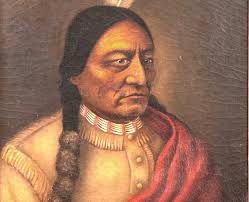
It's too hot to do anything except watch movies or read. Today Woman Walks Ahead came out in theaters and pay per view on DISH. This is the story of Catherine Weldon (Jessica Chastain), a New York painter, who goes out west to paint the legendary Lakota Sioux Chief Sitting Bull (Michael Greyeyes).
We all loved him in Dances With Wolves and then there was Waterworld. See what I mean?
Oh, back to the saga of Catherine and Sitting Bull. It gives you a little history lesson. After all Sitting Bull was not as docile as he seems in the movie. He did lead the massacre of George Armstrong Custer and his men at the Battle of Little Big Horn.
Jessica Chastain shows us again the versatility of her acting. You will remember her from Zero Dark Thirty and The Help. Greyeyes is a Canadian actor, a Plains Cree. He is trained in classical ballet and is a graduate of the National Ballet School. His movie credits include The Dreaming, Dance Me Outside and many more.
Catherine went on to be a champion for Native American rights through the National Indian Defense Association. This movie gets a four in my book. I'm not giving up on well-done, well-written, beautifully-shot, and well-casted movies to tell the stories of the American West.
![]() |
| Greyeyes and Chastain wow us as Catherine and Sitting Bull. Richard Foreman/tiff |
Westerns have made a comeback lately. I'm thrilled, or I was until last week. I set my DVR to catch the entire TVminiseries Yellowstone. Oh. my. goodness. I didn't make it through the first episode. It was terrible. Kevin Costner what were you thinking? When picking projects it's hit or miss with Costner.
We all loved him in Dances With Wolves and then there was Waterworld. See what I mean?
![]() |
| Weldon Portrait of Sitting Bull indiana.com |
Oh, back to the saga of Catherine and Sitting Bull. It gives you a little history lesson. After all Sitting Bull was not as docile as he seems in the movie. He did lead the massacre of George Armstrong Custer and his men at the Battle of Little Big Horn.
Jessica Chastain shows us again the versatility of her acting. You will remember her from Zero Dark Thirty and The Help. Greyeyes is a Canadian actor, a Plains Cree. He is trained in classical ballet and is a graduate of the National Ballet School. His movie credits include The Dreaming, Dance Me Outside and many more.
![]() |
| Catherine Weldon teaser-trailer.com |
Catherine went on to be a champion for Native American rights through the National Indian Defense Association. This movie gets a four in my book. I'm not giving up on well-done, well-written, beautifully-shot, and well-casted movies to tell the stories of the American West.
Monday, May 28, 2018
Delta rain
I stay in my little area of Mississippi—the rolling hill country of North Mississippi—so much that I forget how beautiful other parts of the state are. Only 35 miles from my back door you drop off into the Mississippi Delta—flat, treeless, but beautiful in its own right. Land of the field hollers, birthplace of the Delta Blues, home for the rich and poor, and landscapes all its own. Driving back home today I saw rain in the distance but never felt a drop, then looking in the other direction experienced one of the most beautiful full rainbows I've ever seen—the sign of a promise. Only a few raindrops fell.
Friday, May 4, 2018
New Gunsmoke fan 43 years after series ends
It looks like spring might be here, after a long, gray, bleak winter. It must have rained every day since October. Stuck in the house, I had found myself binge-watching Gunsmoke. I have done some research and found out some things I never knew about Matt and Festus, in particular.
Did you know that Festus, Ken Curtis, was a singer before beginning his acting career? He was with the Tommy Dorsey Band in 1941, and succeeded Frank Sinatra as vocalist until Dick Hayes contractually replaced Sinatra. (wickapedia.org) Ken Curtis joined the Sons of the Pioneers as a lead singer from 1949 to 1952. His big hits with the group included "Room Full of Roses" and "(Ghost) Riders in the Sky."
Take a listen. https://www.youtube.com/watch?v=fWR6FLnPack
Columbia pictures hired Curtis in the role of the singing cowboy in early Westerns. Through his second marriage, Curtis was a son-in-law of director John Ford. Curtis teamed with Ford and John Wayne in Rio Grande, The Quiet Man, The Wings of Eagles, The Searchers, The Horse Soldiers, The Alamo, and How The West Was Won. Curtis also joined Ford, along with Henry Fonda, James Cagney, William Powell, and Jack Lemmon, in the comedy Navy classic Mister Roberts. He was featured in all three of the only films produced by Cornelius Vanderbilt Whitney's C. V. Whitney Pictures: The Searchers (1956); The Missouri Traveler (1958) with Brandon deWilde and Lee Marvin. (wikipedia.org)
I though that was pretty cool stuff. I saw ole Festus on board his mule at the rodeo at the Mid-South Fair in Memphis when I was a kid. He rode right past us, waving his hat and making his corny jokes in his Festus voice, which I'm understand was nothing like his regular speaking voice.
Then there is the issue of Matt Dillon's (James Arness) horse. Although he rode several horses in the series, his most remembered horse was Buck, or Old Faithful Buck, a buckskin of Waggoner Quarter Horse breeding. If you look closely in some shots you can see the JA brand on his right shoulder.
That brand had to be covered up when the series ended and the horse went on to become Ben Cartwright's (Lorne Green) steed on Bonanza.
Bonanza's Michael Landon once remarked on a talk show that Lorne Greene didn’t much care for riding or horses. Still when Bonanza was cancelled, Lorne bought Buck, for fear that the horse would end up in a bad way. He then donated Buck to a therapeutic riding center. Buck taught mentally and physically challenged children to ride until his passing in 1992 at the age of 45, an unusually long life for a horse. (INSP tv blog)
I'll see if I can find more tidbits on old Westerns, their characters and their horses. "Happy Trails." Oops, wrong Western.
Did you know that Festus, Ken Curtis, was a singer before beginning his acting career? He was with the Tommy Dorsey Band in 1941, and succeeded Frank Sinatra as vocalist until Dick Hayes contractually replaced Sinatra. (wickapedia.org) Ken Curtis joined the Sons of the Pioneers as a lead singer from 1949 to 1952. His big hits with the group included "Room Full of Roses" and "(Ghost) Riders in the Sky."
Take a listen. https://www.youtube.com/watch?v=fWR6FLnPack
Columbia pictures hired Curtis in the role of the singing cowboy in early Westerns. Through his second marriage, Curtis was a son-in-law of director John Ford. Curtis teamed with Ford and John Wayne in Rio Grande, The Quiet Man, The Wings of Eagles, The Searchers, The Horse Soldiers, The Alamo, and How The West Was Won. Curtis also joined Ford, along with Henry Fonda, James Cagney, William Powell, and Jack Lemmon, in the comedy Navy classic Mister Roberts. He was featured in all three of the only films produced by Cornelius Vanderbilt Whitney's C. V. Whitney Pictures: The Searchers (1956); The Missouri Traveler (1958) with Brandon deWilde and Lee Marvin. (wikipedia.org)
| Karl E. Farr Collection. Bob Nolan |
I though that was pretty cool stuff. I saw ole Festus on board his mule at the rodeo at the Mid-South Fair in Memphis when I was a kid. He rode right past us, waving his hat and making his corny jokes in his Festus voice, which I'm understand was nothing like his regular speaking voice.
Then there is the issue of Matt Dillon's (James Arness) horse. Although he rode several horses in the series, his most remembered horse was Buck, or Old Faithful Buck, a buckskin of Waggoner Quarter Horse breeding. If you look closely in some shots you can see the JA brand on his right shoulder.
That brand had to be covered up when the series ended and the horse went on to become Ben Cartwright's (Lorne Green) steed on Bonanza.
Bonanza's Michael Landon once remarked on a talk show that Lorne Greene didn’t much care for riding or horses. Still when Bonanza was cancelled, Lorne bought Buck, for fear that the horse would end up in a bad way. He then donated Buck to a therapeutic riding center. Buck taught mentally and physically challenged children to ride until his passing in 1992 at the age of 45, an unusually long life for a horse. (INSP tv blog)
I'll see if I can find more tidbits on old Westerns, their characters and their horses. "Happy Trails." Oops, wrong Western.
![]() |
| James Arness and Buck (Getty images)Buck |
![]() |
| Lorne Greene and Buck (ponderosascenery.homestead.com) |
Thursday, April 26, 2018
I'm out of my comfort zone with Carving Place and loving it
I have written all my adult life—first news for radio, commercials for radio, scripts for video; in journalism—print news, feature writing, many papers when I returned to Ole Miss at DeSoto Center to finish my degree, stories about students, about art, about our college (NWCC), resolutions to be spread on the minutes of the Board of Trustees honoring retiring board members, and even an occasional sports story, mainly covering rodeo.
I have written obituaries for people and delivered remarks at funerals including 2 co-workers and my best childhood friend. Among the obits are several for animals—an ancient pony, our beloved cat Patches, and Howard's bird dog Sam. What do all these writings have in common? They don't include one original thought from me. They are all factual. All that writing was in the mode of, "Just the facts ma'am."
"Just the facts, ma'am" is a well-known line of dialogue from an old TV show called Dragnet. Detective Sgt. Friday was always using this line to get factual answers from the witness to a crime. (https://www.englishforums.com/English/FactsMaamFacts/zddlq/post.htm)
I've never, in my 37-year career, been able to make up anything. So when I decided to write a novel, I had to step out of my comfort zone to create situations and characters and especially dialogue.
When I returned to Ole Miss in 2003 to finish my Liberal Arts degree, I told one of my professors that I struggled with the dialogue problem. "Read good writers," he said. "Like Greg Iles." So I did. I put my novel on hold while I read Greg's huge three-book Natchez Burning series. His books were thousands of pages long. Mine was just over 200. During my reading phase, I've read many other great authors. I was even more intimidated about writing something myself.
I released The Carving Place April 12. Response has humbled me. Thanks to all who have read my little book. I'm hard at work on the prequel The Bargain. I wrote about so many things that I love in the first book—horses, dogs, tradition, customs, art, music, and the name tree—I hope I left a few to include in the new book.
This liberation from the facts and Associated Press style writing has been so fun. I feel like I've done something slightly naughty.
For more information, visit thecarvingtree.com or find us on Facebook at The Carving Place, a novel. You can email me at thecarvingplace@gmail.com.
Celebrating the release of my book are Judge Melvin McClure, Jr. and his wife Mary Claire. Over a year ago we celebrated his book, Forrest's Cavalry in The Battle of Hurricane Creek. (left)
I have written obituaries for people and delivered remarks at funerals including 2 co-workers and my best childhood friend. Among the obits are several for animals—an ancient pony, our beloved cat Patches, and Howard's bird dog Sam. What do all these writings have in common? They don't include one original thought from me. They are all factual. All that writing was in the mode of, "Just the facts ma'am."
"Just the facts, ma'am" is a well-known line of dialogue from an old TV show called Dragnet. Detective Sgt. Friday was always using this line to get factual answers from the witness to a crime. (https://www.englishforums.com/English/FactsMaamFacts/zddlq/post.htm)
I've never, in my 37-year career, been able to make up anything. So when I decided to write a novel, I had to step out of my comfort zone to create situations and characters and especially dialogue.
When I returned to Ole Miss in 2003 to finish my Liberal Arts degree, I told one of my professors that I struggled with the dialogue problem. "Read good writers," he said. "Like Greg Iles." So I did. I put my novel on hold while I read Greg's huge three-book Natchez Burning series. His books were thousands of pages long. Mine was just over 200. During my reading phase, I've read many other great authors. I was even more intimidated about writing something myself.I released The Carving Place April 12. Response has humbled me. Thanks to all who have read my little book. I'm hard at work on the prequel The Bargain. I wrote about so many things that I love in the first book—horses, dogs, tradition, customs, art, music, and the name tree—I hope I left a few to include in the new book.
This liberation from the facts and Associated Press style writing has been so fun. I feel like I've done something slightly naughty.
For more information, visit thecarvingtree.com or find us on Facebook at The Carving Place, a novel. You can email me at thecarvingplace@gmail.com.
Celebrating the release of my book are Judge Melvin McClure, Jr. and his wife Mary Claire. Over a year ago we celebrated his book, Forrest's Cavalry in The Battle of Hurricane Creek. (left)
With me at the book launch are (l to) daughters Olivia Patterson DeMuth, Hayley Patterson Hayes and granddaughter Bella Hayes. (right)
Wednesday, February 14, 2018
Borrowed time
She trips over pine cones and sticks. She can't find her bed and spins in the room looking distraught. I hear her crying at night when she wakes up and can't figure out where she is. It's hard for her to find her way into the house. She ends up in a corner by the steps and can't understand why she can't push the door open with her little nose. She has more accidents.
I got her in 2006 when I had shoulder surgery. I'd always wanted a little dog in the house, but the other person that lives here did not. After taking care of me for a week he decided it was time to finally let me get one. And then he went to Texas bird hunting for more than a week, leaving me with this little puppy and still unable to drive and put my clothes on. It snowed. Baby silkies do not like to get their feet cold or wet (adult ones don't like it either), so there I stood in the snow, my arm in a sling, in my pj's, begging this little three pounds of hair to POTTY. We survived and bonded.
Sydney the Silky Terrier is 12 now. She started losing her vision when she was four. Navigating around the house has never been a problem, until this year. Almost all vision is gone.
She still can smell a coon or possum on the window ledge outside the bedroom window before the big outside dogs do. Her hearing is fine. If I say the word "treat" she will come from the comfort of her bed and sit at my feet....if she can find me.
When I learned she was going blind, I got her a companion dog—Vamaro's Elegant Gal or "Ellie", but most often she's is called, "you little %$#*." I put a cat bell on Ellie's collar so Sydney could hear where she was. They travel together and sometimes fight like sisters, over a milk bone, or the favorite kennel, or for no reason at all.
Ellie is affectionate and wags all the time. Sydney has always been a little reserved, shy, and wound a little too tight, like me. That's why she's my heart dog.
When she hears my voice and wiggles and wags. I pick her up and tell her to "give me a kiss" and she gives me half of her tongue on my cheek for half of a second. That's all I get, and I'm lucky when I get that much.
Sydney still runs and jumps in her pen, threatens the birds overhead when they get too close, and can out-walk her companion Ellie. I pick her up when she cries and she stops. When I wake up and take my first big breath, she immediately comes to life and wants out of her kennel.
It's not time Sydney. Not yet. As long as I get wags and wiggles and half kisses, it's not time.
I got her in 2006 when I had shoulder surgery. I'd always wanted a little dog in the house, but the other person that lives here did not. After taking care of me for a week he decided it was time to finally let me get one. And then he went to Texas bird hunting for more than a week, leaving me with this little puppy and still unable to drive and put my clothes on. It snowed. Baby silkies do not like to get their feet cold or wet (adult ones don't like it either), so there I stood in the snow, my arm in a sling, in my pj's, begging this little three pounds of hair to POTTY. We survived and bonded.
Sydney the Silky Terrier is 12 now. She started losing her vision when she was four. Navigating around the house has never been a problem, until this year. Almost all vision is gone.
![]() |
| Sydney, leftt, and Ellie give me the stare down from the stool. |
When I learned she was going blind, I got her a companion dog—Vamaro's Elegant Gal or "Ellie", but most often she's is called, "you little %$#*." I put a cat bell on Ellie's collar so Sydney could hear where she was. They travel together and sometimes fight like sisters, over a milk bone, or the favorite kennel, or for no reason at all.
Ellie is affectionate and wags all the time. Sydney has always been a little reserved, shy, and wound a little too tight, like me. That's why she's my heart dog.
When she hears my voice and wiggles and wags. I pick her up and tell her to "give me a kiss" and she gives me half of her tongue on my cheek for half of a second. That's all I get, and I'm lucky when I get that much.
![]() |
| Hanging out in the clothes basket that holds the dog laundry. Sydney (left) |
It's not time Sydney. Not yet. As long as I get wags and wiggles and half kisses, it's not time.
Below, walking the team.
Friday, October 6, 2017
Hay in afternoon light
Hay and horses. It's hard to beat the smell of good, fresh hay. My pre-teen memories with hay emerged tonight as I looked at the late afternoon sun setting behind the hay rolls.
I spent my weekends and most of my summers with my daddy on this farm. He knew he didn't have to do much to keep me happy and out of his way—just put me on a horse. I would wait patiently on old Tobie for the baler to spit out a row of square bales, not big round ones like the photos here.
Tobie and I would trot around the bales. That was fun, but the most fun was jumping them. We jumped and jumped until daddy would tell me to go put her up.
I love living here in my farmhouse on our family land. It is my hope that I can pass it down to someone who will love it as much as I do, as Daddy did, as Cathey Dandridge did, as his mother Mary Eliza Cathey Dandridge did, as her father Mathew Lafon Cathey did.
Here's to hay and horses.
![]() |
| My farmhouse in Barr |
Subscribe to:
Posts (Atom)